So, I'm a nerd, and every year at this time I take inventory of the past 360-some-odd days and do some reflecting. I craft something that's not really new years' resolutions - more of a strategic plan (okay, same thing, but I feel better if I call it a strategic plan).
I try to respect the process and let it speak for itself, so sometimes it results in some action items, and sometimes it's more of a philosophical theme for the year. Often it's both.
This year a word kind of shot out of the ether and hit me in the chest. I haven't thought much of it prior to a week ago, but it kind of instantly organized they way I experienced so many things in 2013.
PEACE
I don't mean that I will stop genocide or prevent people from getting trampled on Black Friday. Noble causes, both, but perhaps a little lofty for a one-year-goal. I'd be happy with the ability to sleep without grinding my teeth down to the nubs.
What does it mean? It's a pretty broad term - bordering on impossible to define. So I'll just give you my take on it.
I would've never guessed when I was in college 12 years ago that I would actually remember things from the courses I took, but there was a psyc course that spoke about causes of stress, and attributed much of it to a disconnect we have between our perceived self and our actual self.
Your perceived self is the person you like to think of yourself as. Are you honest? Hard working? A straight talker? Do you see yourself as frugal? Loyal? Logical? When we think of ourselves in certain situations, we tend to think of the best version of ourselves, acting according to our values and principles in every situation. The perceived self is the sum total of your thoughts about yourself.
The actual self isn't quite as glorious. While I may perceive myself as frugal, my actual self buys a coffee and eats out for lunch almost every day. Maybe you perceive yourself as loyal, but you overlook those times that you passed along a piece of information that was given to you in confidence. The actual self is the sum total of your actual behaviours.
When the perceived self and the actual self are in sync, stress is low. Everything's jiving. When there is a big differential between who you think you are and what you actually behave like, you have to do a lot more mental acrobatics to feel happy in your own skin.
There's value in telling the truth about yourself to yourself. Regardless of what you call it, faking it till you make it or pretending you're something you're not is hard on your stress levels. You are not living up to your expectations for yourself.
So, what's my goal? Be honest about where I am. Don't fight so hard against the fact that I'm JUST where I am. Spend more time making good choices that put me in the right direction - where I want to be. But stop acting as my own judge, jury, and executioner because I wish I was at this income or that capability of self control. When your actual self is distant from your perceived self, there's a tendency to be in denial about it. And denial - knowing the truth but pretending something else is true - is inherently stressful.
Getting to a goal by pretending to be something you're not is like letting your skin heal over an infected wound. Yes, it looks healed, but it creates an abscess underneath the surface that eventually surfaces worse than it ever was before.
So, for my purposes at this point in time, peace means acting in accordance with your values, being honest about where you fall short, and then being unapologetic for the way that you are. Having a clean conscience about who you are and why.
Here's hoping you find peace and perspective on your circumstances as well.
Tuesday, 24 December 2013

Sunday, 14 July 2013
First World Problems, and the Spoiled Rich Kids Who Have Them: Us.
"What is to give light must endure burning." - Victor Frankl
I'm reading Frankl's book, "Man's Search for Meaning" right now. He's a psychological theorist who builds his case around his experiences in concentration camps in Auschwitz and Dachau. A key point of his theory is that the human mind can adapt to the most dire circumstances if it can find a goal or purpose to focus on. If one has a clear purpose, the fires of hell are no longer a destructive force, but rather are a crucible - clarifying your focus and your desire. Your purpose is the only thing you have left once your creature comforts, your dignity, your health, and even your concept of an end to your suffering have all been stripped away. The message resonates a little deeper when it comes from someone who's been through the utter depravity of a death camp.
I was flipping through radio stations today, and I stumbled upon a radio show about lost causes. The host was interviewing a guy with Huntington's Disease, who was sharing the experience of being diagnosed with a neuro-degenerative disease. While still in good health, he knew his approximate lifespan, and knew, most likely, what was going to kill him in the end. He said that he lives his life with purpose every day, because he doesn't get a mid-life crisis and a retirement. He doesn't get a do-over. Just a 'do'. The interviewer asked him what he would be like without the disease (which he has become a crusader for), and his answer was that he'd probably be totally boring.
Frankl found his purpose in his ability to describe, first hand, what you have left when you lose everything. The radio guy, found that the thing that would eventually cause his death was also the thing giving him life.
Suffering. We fear it, dread it, avoid it. We spend money to minimize it, dull it, or ignore it. But what if we're missing it? What if suffering is actually a thing we NEED? It teaches us what we're truly made of. It has a great way of instantly reminding us what things in life are important and what things are unnecessary. Those two things - finding out your substance and finding out what in your life is unnecessary - are two really valuable things. And they're extremely hard to uncover without the pressure of suffering.
Now, I'm not saying we need to go out and create some suffering in our lives. Nor am I saying that suffering is good. Huntington's disease and time in concentration camps are great examples of how suffering is NOT good. But neither am I talking about simple discomfort. I already wrote that blog post a while ago. We SHOULD pursue discomfort. Suffering, though, finds us. I guess what I'm saying is, if you're suffering anyway, you may as well take advantage of the opportunity in the pain. You have the potential to grow, to learn a lot about yourself. To get some direction. So if you have to do it - if you have to suffer, don't miss the lesson.
How does this play out on a massive scale? Our generation has never experienced a major outbreak. Maybe that's why we consider vaccinations optional. We've never seen war affect us here at home (at least where I come from). So we take freedom and democracy lightly. We've never been all that challenged. So we occupy ourselves with the most trivial pursuits. We obsess over workouts, vacations, restaurants, or cable shows. So we're kind of lost as a group - no purpose. No major rallying points. In one way, we're the luckiest generation.
In another way, we're lost.
Thoughts? Comments? I'd love to hear them.
I'm reading Frankl's book, "Man's Search for Meaning" right now. He's a psychological theorist who builds his case around his experiences in concentration camps in Auschwitz and Dachau. A key point of his theory is that the human mind can adapt to the most dire circumstances if it can find a goal or purpose to focus on. If one has a clear purpose, the fires of hell are no longer a destructive force, but rather are a crucible - clarifying your focus and your desire. Your purpose is the only thing you have left once your creature comforts, your dignity, your health, and even your concept of an end to your suffering have all been stripped away. The message resonates a little deeper when it comes from someone who's been through the utter depravity of a death camp.
I was flipping through radio stations today, and I stumbled upon a radio show about lost causes. The host was interviewing a guy with Huntington's Disease, who was sharing the experience of being diagnosed with a neuro-degenerative disease. While still in good health, he knew his approximate lifespan, and knew, most likely, what was going to kill him in the end. He said that he lives his life with purpose every day, because he doesn't get a mid-life crisis and a retirement. He doesn't get a do-over. Just a 'do'. The interviewer asked him what he would be like without the disease (which he has become a crusader for), and his answer was that he'd probably be totally boring.
Frankl found his purpose in his ability to describe, first hand, what you have left when you lose everything. The radio guy, found that the thing that would eventually cause his death was also the thing giving him life.
Suffering. We fear it, dread it, avoid it. We spend money to minimize it, dull it, or ignore it. But what if we're missing it? What if suffering is actually a thing we NEED? It teaches us what we're truly made of. It has a great way of instantly reminding us what things in life are important and what things are unnecessary. Those two things - finding out your substance and finding out what in your life is unnecessary - are two really valuable things. And they're extremely hard to uncover without the pressure of suffering.
Now, I'm not saying we need to go out and create some suffering in our lives. Nor am I saying that suffering is good. Huntington's disease and time in concentration camps are great examples of how suffering is NOT good. But neither am I talking about simple discomfort. I already wrote that blog post a while ago. We SHOULD pursue discomfort. Suffering, though, finds us. I guess what I'm saying is, if you're suffering anyway, you may as well take advantage of the opportunity in the pain. You have the potential to grow, to learn a lot about yourself. To get some direction. So if you have to do it - if you have to suffer, don't miss the lesson.
How does this play out on a massive scale? Our generation has never experienced a major outbreak. Maybe that's why we consider vaccinations optional. We've never seen war affect us here at home (at least where I come from). So we take freedom and democracy lightly. We've never been all that challenged. So we occupy ourselves with the most trivial pursuits. We obsess over workouts, vacations, restaurants, or cable shows. So we're kind of lost as a group - no purpose. No major rallying points. In one way, we're the luckiest generation.
In another way, we're lost.
Thoughts? Comments? I'd love to hear them.
Friday, 31 May 2013
Success Rate, Implied Hate, and Disembodied Fate
-The people who work the hardest deserve the greatest reward.
-If you set your mind to it, you can accomplish anything.
-You can't change everything, but if you change yourself, everything changes.
Sounds about right, right? Heck, if you're like me, you might've been standing up by the last sentence, looking around for a flag to wave! Anyone? No? Me neither, I was just checking.
I learned something the other day from Alain de Botton that stood me up in my tracks.Watch it if you'd like. We first world western civilization types live in a world with a unique philosophy. Never before in history have humans, individuals, had so much power. If you want, go be the next Steve Jobs. What's stopping you? If you find that sweet spot where your passion and your skill work in harmony, and you can harness your full potential, it could happen to you. Or me. Anyone. When in history has that ever been the case? No lords and dukes. No privileged birth, no caste system. Yes, if mom and dad are loaded, you might have a headstart, but that could be a curse as easily as a blessing in our new philosophy, if it means you don't learn the value of hard work, or the threat of running out of money.
If you are willing to work for it, you can accomplish anything you want. In the words of Jim Rohn, there's lot's of room at the top of the ladder - it's the bottom that's crowded!
I've spent the last 5 or so years internalizing that lesson - trying to increase my knowledge and capacity, trying to improve myself and become the sort of person who is ready to attack when opportunity strikes.
Then 2 days ago I realized this: If you believe that you can earn your way to the top, and that personal effort is the cost of admission, does that not also imply that you think those at the bottom have 'earned' their way to the bottom, and deserve to be there? In the past, they called the poor Unfortunate. These days, you might be more likely to hear them called bums.
I've lived enough days on this planet to know that there are indeed people on the top of the ladder who have not earned their way there. And I've learned that the momentum of a downward spiral can be crushing. And if my philosophy lends itself to telling people who are mired in addiction and poverty to stop being poor and start being awesome instead, then my philosophy sucks.
See, when it's your own effort and personality that is the cause of your success or your demise, wins and losses can become an intensely painful and personal thing. Your wins or losses are not circumstantial. They're a reflection of your character. You brought it on yourself.
It's called meritocracy - a civilization where your effort determines your status. And if all factors were equal, then sure, maybe, over a long enough timeline, life could arrange itself this way, right from the hardest worker to the laziest bum. But what happens when a young family loses their father in a tragic accident? Or when someone gets abused during a very impressionable time - leaving emotional baggage that is extremely difficult to take in stride? The fact is, there is an element of randomness to the world. Just when things start getting predictable - BAM. Tornado. Start over.

Back when societies identified with religions, it was a lot easier to categorize. Blame God, or the gods, or the sprites, or the demons, or the forces, or the... whatever. Fate. But today, society doesn't believe that there is a higher being or power involved. In this world, MAN is the highest power. And we don't really have much of an explanation for the randomness, other than just to say, well, it's random.
I'm pretty sure this is why, though we have the best beds in the world, Western societies also have such high incidences of insomnia. It's our job. It's all our job. It's up to us, and we believe that we have the power to change the fates. And when the fates aren't friendly, we double down and push harder, because our personal effort is the only tool we have.
There are many parts in the world where people don't have the luxury we have of feeling like they're in control. There's never enough food, they're always under threat - whether it's war, sickness, or a wild animal jumping out of the trees and dragging away a weak member of the community, and they can't do anything to stop it. So they lean on eachother and lean on God. They have a healthy relationship with fate, because they know they're subject to it.
Your effort still does have value. It gets going you in the right direction. Like, if you practice rolling dice often enough, maybe you'll get good enough to beat the odds and roll more high numbers. But even then, you still might land on a snake or a ladder.
So, how do we reconcile fate and effort? How do you believe you have the power to change outcomes, and yet remain flexible to the randomness of life? How much stress could we deflate from our lives if we made a healthy respect for fate part of our story again? How do we let ourselves off the hook a little, without 'giving up'? Maybe it was easier to accept when random had a name, and was part of our story of how we got here. We could say, "maybe there's a higher reason for this random thing having happened, because the gods got involved. I don't know why, but lets keep our eyes open for the silver lining." We could outsource the blame.
And if you don't believe that chance plays a strong role, play 5 games of snakes and ladders with a 5 year old, and see how much good your strategy does.
Sunday, 10 March 2013
Don't leave it to the superstars!
Leave it to Daylight Saving Time to create the state of mind where you're sitting in church and what the pastor says reminds you of the Harlem Shake.
The idea under discussion was that no gifts or skills are higher-ranked than other ones. There are always people out there who are very impressive and high profile in their humanitarianism.
The unfortunate reality is that, when we see people out there making a big deal of their good acts, we have a tendency to stand back and leave it to the 'pros.'
As an aside, once you have the Harlem Shake in your head, don't expect to continue tracking with the topic at hand. It kind of doesn't lend itself to that.
This is really random, and I totally blame a crazy weekend and sleep deprivation for this - but here's the thing:
Who's the one who starts the Harlem Shake? Always the guy in the helmet. I won't say he's concerned with fading into the background, but he has no name and no face. And next thing you know, everyone's doing their own freaky dance.
One guy dancing does not an internet meme make. Okay, well other than this. And this. The point is, it doesn't get real till everyone buys in. No one's going for the spotlight. Everyone's doing their own crazy dance.
You don't have to look far to find pain and stress in our world. Most of us don't have to look past ourselves! If hurt and struggle is that prevalent, how could we think the solution could be found by relying on the handful of do-gooders who have dedicated their lives to it? They don't have our eyes. They don't see the needs that we see. They have their own crazy dance, and they're doing it. Like crazy.
I live in Red Deer - I'm in the same boat with everyone else in my community. When people are struggling, WE ARE STRUGGLING. If I'm in the boat, I need to put my oar in the water and pull a little too. Not because people might notice and think I'm amazing. But because if I think everyone should be doing it, that obviously includes me.
I have an acquaintance who recently watched a friend lose her husband prematurely. She and a few others organized an online social media auction and raised, like, $14,000 for a trust fund for her young kids. I have another acquaintance who was moved by a recent suicide in a local high school, and is now making a documentary with the hopes of being honest and real with teenagers about the reality of mental illness, because most tools we use for awareness are cheesy and don't hit home. These are people who were happy to be nameless and faceless. They threw on their helmet and started dancing like crazy, even though nobody else was. And now everyone else is.
So, consider me the guy yelling in spanish at the beginning of the video. Now let's throw on our helmets and spandex, and do our little, anonymous part to make our community a place of healing, care, and wellness!
The idea under discussion was that no gifts or skills are higher-ranked than other ones. There are always people out there who are very impressive and high profile in their humanitarianism.
The unfortunate reality is that, when we see people out there making a big deal of their good acts, we have a tendency to stand back and leave it to the 'pros.'
As an aside, once you have the Harlem Shake in your head, don't expect to continue tracking with the topic at hand. It kind of doesn't lend itself to that.
This is really random, and I totally blame a crazy weekend and sleep deprivation for this - but here's the thing:
Who's the one who starts the Harlem Shake? Always the guy in the helmet. I won't say he's concerned with fading into the background, but he has no name and no face. And next thing you know, everyone's doing their own freaky dance.
One guy dancing does not an internet meme make. Okay, well other than this. And this. The point is, it doesn't get real till everyone buys in. No one's going for the spotlight. Everyone's doing their own crazy dance.
You don't have to look far to find pain and stress in our world. Most of us don't have to look past ourselves! If hurt and struggle is that prevalent, how could we think the solution could be found by relying on the handful of do-gooders who have dedicated their lives to it? They don't have our eyes. They don't see the needs that we see. They have their own crazy dance, and they're doing it. Like crazy.
I live in Red Deer - I'm in the same boat with everyone else in my community. When people are struggling, WE ARE STRUGGLING. If I'm in the boat, I need to put my oar in the water and pull a little too. Not because people might notice and think I'm amazing. But because if I think everyone should be doing it, that obviously includes me.
I have an acquaintance who recently watched a friend lose her husband prematurely. She and a few others organized an online social media auction and raised, like, $14,000 for a trust fund for her young kids. I have another acquaintance who was moved by a recent suicide in a local high school, and is now making a documentary with the hopes of being honest and real with teenagers about the reality of mental illness, because most tools we use for awareness are cheesy and don't hit home. These are people who were happy to be nameless and faceless. They threw on their helmet and started dancing like crazy, even though nobody else was. And now everyone else is.
So, consider me the guy yelling in spanish at the beginning of the video. Now let's throw on our helmets and spandex, and do our little, anonymous part to make our community a place of healing, care, and wellness!
Sunday, 3 March 2013
ENOUGH!
I want more.
I've had enough.
How do these two phrases make you feel? Do you prefer one to the other?
In our culture, we look at these two words as a progression. You're finished wanting more when you've had enough. Although actually, 'enough' tends to be a pretty elusive concept. We chase it like happiness - every time you think you're getting close to it, it moves off to the horizon again.
In fact, usually when I think of the phrase, "I've had enough," I hear it in exasperation - when things pile on at a rate we can't tolerate. We only say "Enough" when we actually mean "TOO MUCH".
I actually think we don't understand the meaning of the word 'enough.' I think it should be more closely associated with the word 'satisfied.' That word doesn't suggest that you're getting all you can handle. It has more of a connotation that, though there's capacity for more, the current amount will work just fine.
Our culture doesn't really get equilibrium. We tip the scale all the way forward, like a sprinter about to charge out of the starting blocks. We're always pushing, striving, struggling. Always expending. That's as healthy as always exhaling. Our access to easy energy means that we have amazing leverage to expand and increase our wealth and profile, but if 6-7 billion people all tried to only ever accumulate, we would very quickly find ourselves in a huge problem. Heck, we're on our way there now!
The earth doesn't constantly expand. What we have is what we have (unless an asteroid lands). It's the law of conservation of mass. Natural principles are wired around taking what you need and leaving behind something someone else can use. Trees absorb CO2. They provide oxygen. Their lost leaves degrade into soil. No waste. Why do we think that constant expansion, constant accumulation, and infinite growth is a good idea? Where's the precedent for that?
 This for example, is what it looks like to sell more computer monitors year over year.
I think we need to turn down the "more" talk, and start asking ourselves what 'enough' looks like.
I'm not talking about redistribution of wealth here. A lot of people take this to that next step. But that's the step where you lose people. Fact is, if you knew what it was that made you satisfied, and that's what you went for and no more, nobody would need to re-distribute your wealth! More isn't a thing to want.
If we never feel like we have enough, we will never feel peace. Satisfaction is a great feeling. It feels like a good night's sleep. It feels like equilibrium. And when your needs are met and you're satisfied, you'll find yourself with a lot more time to help others reach their 'enough' too.
What does 'enough' look like for you?
I've had enough.
How do these two phrases make you feel? Do you prefer one to the other?
In our culture, we look at these two words as a progression. You're finished wanting more when you've had enough. Although actually, 'enough' tends to be a pretty elusive concept. We chase it like happiness - every time you think you're getting close to it, it moves off to the horizon again.
In fact, usually when I think of the phrase, "I've had enough," I hear it in exasperation - when things pile on at a rate we can't tolerate. We only say "Enough" when we actually mean "TOO MUCH".
I actually think we don't understand the meaning of the word 'enough.' I think it should be more closely associated with the word 'satisfied.' That word doesn't suggest that you're getting all you can handle. It has more of a connotation that, though there's capacity for more, the current amount will work just fine.
Our culture doesn't really get equilibrium. We tip the scale all the way forward, like a sprinter about to charge out of the starting blocks. We're always pushing, striving, struggling. Always expending. That's as healthy as always exhaling. Our access to easy energy means that we have amazing leverage to expand and increase our wealth and profile, but if 6-7 billion people all tried to only ever accumulate, we would very quickly find ourselves in a huge problem. Heck, we're on our way there now!
The earth doesn't constantly expand. What we have is what we have (unless an asteroid lands). It's the law of conservation of mass. Natural principles are wired around taking what you need and leaving behind something someone else can use. Trees absorb CO2. They provide oxygen. Their lost leaves degrade into soil. No waste. Why do we think that constant expansion, constant accumulation, and infinite growth is a good idea? Where's the precedent for that?

I think we need to turn down the "more" talk, and start asking ourselves what 'enough' looks like.
I'm not talking about redistribution of wealth here. A lot of people take this to that next step. But that's the step where you lose people. Fact is, if you knew what it was that made you satisfied, and that's what you went for and no more, nobody would need to re-distribute your wealth! More isn't a thing to want.
If we never feel like we have enough, we will never feel peace. Satisfaction is a great feeling. It feels like a good night's sleep. It feels like equilibrium. And when your needs are met and you're satisfied, you'll find yourself with a lot more time to help others reach their 'enough' too.
What does 'enough' look like for you?
Sunday, 24 February 2013
It's built but they ain't coming: wellness and safety in a siloed community
Ever had an idea kind of keep bouncing back into your head time and again? Something you've never really thought of before, but then suddenly it seem like it's everywhere, and you can't believe you've never seen it before? I had one of those.
So, I was sitting in a community meeting the other day, and we were discussing something fancy like, "how do you encourage community engagement in a winter city where it's hard to get outside for four to six months of the year?" Outdoor play areas are great, as are indoor areas, and they all got discussed. But then someone made an interesting observation that you can build as many amenities as you'd like - it really doesn't mean ANYTHING if people don't go out and use them.
Building an indoor playground does not make community members engage. Making programs does not encourage citizens to connect. Dr. Frankenstein would never have made the news if he hadn't found that magic ingredient, and it's the same thing that is too often missing from our municipal planning. You can stitch the body parts together - build the whole thing - but the true challenge is that elusive 'breath of life'.

I sit on another committee - part of a 'task force' to end homelessness. One of the biggest things we've identified that's missing is a FORUM. A place where the stakeholders can go and exchange information. Builders don't have to guess what the community needs for housing. Service providers can go and share their stories and needs. Funding providers make know what they have available to solve the problem.
We lack a place. But it's not a physical space. We could build a room just for this to happen and it still wouldn't happen. What we're missing is that elusive thing - that thing that draws people out. That thing that invites the discussion to happen. We lack, well, hosting. The "breath of life," so to speak is getting people to show up.
Imagine that it's Christmas time and I'm throwing a party. What is it that makes the party? It's not my house - the physical space. There's an effort that goes into it. I try and attract the people I desire to be there by making that place feel appealing. I decorate, I prepare food. I plan fun activites. I invite other people who would make the party enjoyable - who will add to the atmosphere. At the end of the day, the location is the smallest part of the equation. My party will be amazing because the RIGHT people are there, talking about the RIGHT things, in the RIGHT atmosphere. RIGHT?
THIS is what our municipal planners need to be trying to foster! Indoor space? Outdoor space? Sure, you need gathering places to attract people to. But whether it's a summer festival or a discussion on ending homelessness that you're trying to accomplish, you need to consider how you're HOSTING the event. Who's coming? Is it a context they'll feel welcome in? Does everyone gain more from attending than they're giving? Is it likely to be effective?
Create the right 'space' (mental space), and you will have the right people arrive. Fail to create the right place, and they'll stay in their silos.
Ever wondered why it is that the world feels so unsafe? 20 years ago, parents kicked their kids out the door to go find the park. They'd play all day and come back when the street lights turned on. Not so today. I heard someone the other day tell a story that he asked a woman if she let her kids walk the 2 or 3 blocks to their neighbourhood school. Her answer was no, and when he asked why, her response was something to the effect of, "The pedophiles."
Neighbourhoods haven't changed in 20 years. We have. WE don't feel safe. And I think it's the same thing. We can double the amount of police, but if we don't know our neighbours, we still aren't going to feel safe. Heck, if I knew who lived around me, maybe I'd know who the kids were who rifled through my car. One quick call to their parents, and I'd feel MORE safe in my neighbourhood, not less!
So how can I create that community - draw my neighbours out? Well, maybe I could haul my barbecue into the middle of the close and put some flyers in the mailboxes? Shake some hands and introduce myself. If I feel like there are more sets of eyes on Silas than just my own, maybe I wouldn't be so scared to let him pedal out of my sight on his own.
Building places, adding programs - it's not going to work. And it's going to make us go broke. What is going to make the difference? Find ways to make mental spaces that draw people together. Where the right conversations can happen. THEN we'll feel safe in our neighbourhoods. THEN we can get down to the business of ending homelessness! THEN we can have communities that are HEALTHY. It comes down to people. Finding out what draws them out. And doing that.
Any ideas? I'd love to hear them.
So, I was sitting in a community meeting the other day, and we were discussing something fancy like, "how do you encourage community engagement in a winter city where it's hard to get outside for four to six months of the year?" Outdoor play areas are great, as are indoor areas, and they all got discussed. But then someone made an interesting observation that you can build as many amenities as you'd like - it really doesn't mean ANYTHING if people don't go out and use them.
Building an indoor playground does not make community members engage. Making programs does not encourage citizens to connect. Dr. Frankenstein would never have made the news if he hadn't found that magic ingredient, and it's the same thing that is too often missing from our municipal planning. You can stitch the body parts together - build the whole thing - but the true challenge is that elusive 'breath of life'.
I sit on another committee - part of a 'task force' to end homelessness. One of the biggest things we've identified that's missing is a FORUM. A place where the stakeholders can go and exchange information. Builders don't have to guess what the community needs for housing. Service providers can go and share their stories and needs. Funding providers make know what they have available to solve the problem.
We lack a place. But it's not a physical space. We could build a room just for this to happen and it still wouldn't happen. What we're missing is that elusive thing - that thing that draws people out. That thing that invites the discussion to happen. We lack, well, hosting. The "breath of life," so to speak is getting people to show up.
Imagine that it's Christmas time and I'm throwing a party. What is it that makes the party? It's not my house - the physical space. There's an effort that goes into it. I try and attract the people I desire to be there by making that place feel appealing. I decorate, I prepare food. I plan fun activites. I invite other people who would make the party enjoyable - who will add to the atmosphere. At the end of the day, the location is the smallest part of the equation. My party will be amazing because the RIGHT people are there, talking about the RIGHT things, in the RIGHT atmosphere. RIGHT?
THIS is what our municipal planners need to be trying to foster! Indoor space? Outdoor space? Sure, you need gathering places to attract people to. But whether it's a summer festival or a discussion on ending homelessness that you're trying to accomplish, you need to consider how you're HOSTING the event. Who's coming? Is it a context they'll feel welcome in? Does everyone gain more from attending than they're giving? Is it likely to be effective?
Create the right 'space' (mental space), and you will have the right people arrive. Fail to create the right place, and they'll stay in their silos.
Ever wondered why it is that the world feels so unsafe? 20 years ago, parents kicked their kids out the door to go find the park. They'd play all day and come back when the street lights turned on. Not so today. I heard someone the other day tell a story that he asked a woman if she let her kids walk the 2 or 3 blocks to their neighbourhood school. Her answer was no, and when he asked why, her response was something to the effect of, "The pedophiles."
Neighbourhoods haven't changed in 20 years. We have. WE don't feel safe. And I think it's the same thing. We can double the amount of police, but if we don't know our neighbours, we still aren't going to feel safe. Heck, if I knew who lived around me, maybe I'd know who the kids were who rifled through my car. One quick call to their parents, and I'd feel MORE safe in my neighbourhood, not less!
So how can I create that community - draw my neighbours out? Well, maybe I could haul my barbecue into the middle of the close and put some flyers in the mailboxes? Shake some hands and introduce myself. If I feel like there are more sets of eyes on Silas than just my own, maybe I wouldn't be so scared to let him pedal out of my sight on his own.
Building places, adding programs - it's not going to work. And it's going to make us go broke. What is going to make the difference? Find ways to make mental spaces that draw people together. Where the right conversations can happen. THEN we'll feel safe in our neighbourhoods. THEN we can get down to the business of ending homelessness! THEN we can have communities that are HEALTHY. It comes down to people. Finding out what draws them out. And doing that.
Any ideas? I'd love to hear them.
Saturday, 16 February 2013
Auto Pilot
When life gets stressful, the first thing that goes out the window is our creativity, our appetite for new initiatives. Our brains want to hunker down. Enough things are out of our control. Why would we chase after something we aren't able to predict?
As life goes on, this is how we get set in our ways. And each time it happens, a little scar tissue grows on top of the scar tissue we already had from before.
Our routines and habits? At their best, they provide structure and foundation. They are the skeleton, and our creativity and initiative are the muscles - we need them both. But when we get shell-shocked from stress, hurt, and day after day of being a little bit hurt, a little bit unhappy, a little bit dissatisified, those habits and routines become overpowering. We stop allowing people access to our deepest parts. In fact, we just lock the door and don't even wander down there ourselves. It's just easier.
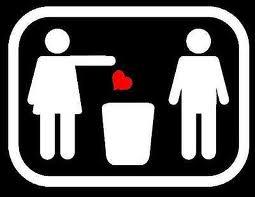
Maybe you've lost someone very dear to you. Was your experience like mine? When my mom passed away 7 years ago, at the same time as the pain and stress was overwhelming, there was a side of me that felt some relief, some satisfaction, that I was able to just feel something so strongly. To cry with impunity and feel like I didn't need to suck it up. I was allowed to let my heart break. And in those moments, while my heart was torn apart, the ground was fertile. I learned who my real friends were, and those relationships deepened, while others fell off. I developed coping mechanisms (not all good).
Like all emotional experiences, I healed. Like a flesh wound, first I scabbed over, then I healed, albeit with a permanent scar. Those scars come in the form of coping mechanisms I developed, assumptions I made about the world (my mom, who never smoked or drank, and LOVED everyone, was taken early, while the drunk who passed the bakery she worked at daily outlived her. Try not to grow cynical with THAT in your story).
I collect scars as I go through life. Some big, some smaller. But they accumulate. And they kill my sensitivity. And I have a theory about that.
If you're a regular coffee drinker, you might wake up one morning after a lousy sleep, and think, "I'm gonna need something with a little extra kick today." And so you buy an energy drink. You've been numbed to the effect of coffee. You need to step it up. People who drink need to drink more. People who do drugs keep upping the dose so they can get closer to that rush they first experienced.
In the absence of sensitivity, we pursue sensuality. When I'm not engaged, I don't hear my wife's hints that she had a rough day. So I say something dismissive, and hurt her feelings. And then I don't have to talk to her for the night. And it perpetuates the problem. Relationships take work. But when I'm tired and a little hurt, it's easier for me to invest my emotion into a sports game. Maybe for you it's the bachelor, or social media. Or other friends who you can laugh with superficially but don't have to worry about hard stuff with. You can have the quick benefits with none of the hard work. It's like deciding that, rather than exercising to get an endorphin rush, maybe you'll try cocaine instead...
How do we avoid the scar tissue? How do we keep the sensitivity? I think one way is to try and recognize the sensuality in our lives. Are there any areas where you're avoiding hard work to do something easier and more fun? You might think yogurt with blueberries is a really lame snack. Especially if you're used to black forest cake. But give up the sugar, and you'll start to realize how many other flavours there are out there other than sweet.
Try sitting in silence for 5 minutes - turn off the electronics and listen. You'll be surprised how many sounds exist in what you called silence just a minute ago. That's what we need to shoot for. Look at the people in your life, and see if you've REALLY listened. Listened to their silence. Look at the struggles in your life - are you avoiding the hard work? What about that tough situation have you been ignoring, avoiding? Because I think we end up going through WAY too much of our lives in auto-pilot, because we just never stop to listen for what's really going on around us. And if we can shut off the auto-pilot, even for an extra half-hour or hour a day, I think we'd be in an absolutely different place in as little as 6 months to a year.
What do you think? Do we numb? How DO you shut off auto-pilot? It's hard to untrain yourself. What is the first step? Because recognizing the problem really isn't that constructive. Help me find the solution! I welcome your comments below.
As life goes on, this is how we get set in our ways. And each time it happens, a little scar tissue grows on top of the scar tissue we already had from before.
Our routines and habits? At their best, they provide structure and foundation. They are the skeleton, and our creativity and initiative are the muscles - we need them both. But when we get shell-shocked from stress, hurt, and day after day of being a little bit hurt, a little bit unhappy, a little bit dissatisified, those habits and routines become overpowering. We stop allowing people access to our deepest parts. In fact, we just lock the door and don't even wander down there ourselves. It's just easier.
Maybe you've lost someone very dear to you. Was your experience like mine? When my mom passed away 7 years ago, at the same time as the pain and stress was overwhelming, there was a side of me that felt some relief, some satisfaction, that I was able to just feel something so strongly. To cry with impunity and feel like I didn't need to suck it up. I was allowed to let my heart break. And in those moments, while my heart was torn apart, the ground was fertile. I learned who my real friends were, and those relationships deepened, while others fell off. I developed coping mechanisms (not all good).
Like all emotional experiences, I healed. Like a flesh wound, first I scabbed over, then I healed, albeit with a permanent scar. Those scars come in the form of coping mechanisms I developed, assumptions I made about the world (my mom, who never smoked or drank, and LOVED everyone, was taken early, while the drunk who passed the bakery she worked at daily outlived her. Try not to grow cynical with THAT in your story).
I collect scars as I go through life. Some big, some smaller. But they accumulate. And they kill my sensitivity. And I have a theory about that.
If you're a regular coffee drinker, you might wake up one morning after a lousy sleep, and think, "I'm gonna need something with a little extra kick today." And so you buy an energy drink. You've been numbed to the effect of coffee. You need to step it up. People who drink need to drink more. People who do drugs keep upping the dose so they can get closer to that rush they first experienced.
In the absence of sensitivity, we pursue sensuality. When I'm not engaged, I don't hear my wife's hints that she had a rough day. So I say something dismissive, and hurt her feelings. And then I don't have to talk to her for the night. And it perpetuates the problem. Relationships take work. But when I'm tired and a little hurt, it's easier for me to invest my emotion into a sports game. Maybe for you it's the bachelor, or social media. Or other friends who you can laugh with superficially but don't have to worry about hard stuff with. You can have the quick benefits with none of the hard work. It's like deciding that, rather than exercising to get an endorphin rush, maybe you'll try cocaine instead...
How do we avoid the scar tissue? How do we keep the sensitivity? I think one way is to try and recognize the sensuality in our lives. Are there any areas where you're avoiding hard work to do something easier and more fun? You might think yogurt with blueberries is a really lame snack. Especially if you're used to black forest cake. But give up the sugar, and you'll start to realize how many other flavours there are out there other than sweet.
Try sitting in silence for 5 minutes - turn off the electronics and listen. You'll be surprised how many sounds exist in what you called silence just a minute ago. That's what we need to shoot for. Look at the people in your life, and see if you've REALLY listened. Listened to their silence. Look at the struggles in your life - are you avoiding the hard work? What about that tough situation have you been ignoring, avoiding? Because I think we end up going through WAY too much of our lives in auto-pilot, because we just never stop to listen for what's really going on around us. And if we can shut off the auto-pilot, even for an extra half-hour or hour a day, I think we'd be in an absolutely different place in as little as 6 months to a year.
What do you think? Do we numb? How DO you shut off auto-pilot? It's hard to untrain yourself. What is the first step? Because recognizing the problem really isn't that constructive. Help me find the solution! I welcome your comments below.
Subscribe to:
Posts (Atom)